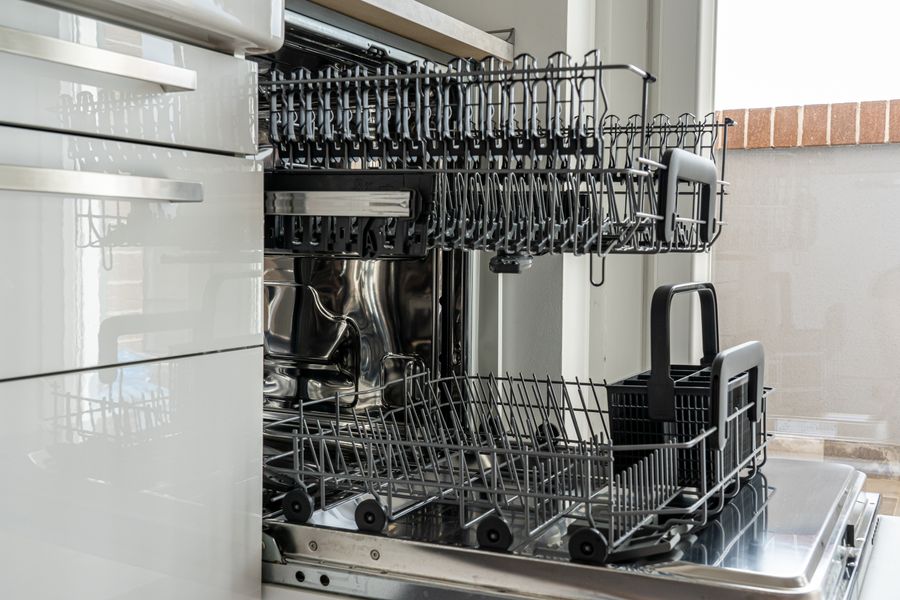
You run a full cycle, open the dishwasher, and every glass comes out with a hazy, filmy coating instead of the clear shine you expected. It's a genuinely common complaint, and the good news is it's almost never actually a broken dishwasher. Here's what's really going on, and the specific fix for each cause.
The Most Likely Cause: Hard Water Mineral Deposits
In most cases, especially here in San Diego, cloudy glasses come from hard water minerals, mainly calcium and magnesium, that deposit onto glass surfaces as the water evaporates during the dry cycle. This is called etching or mineral film, and it happens gradually with every wash.
You can usually tell this is the cause with a simple test: soak a cloudy glass in white vinegar for a few minutes. If the cloudiness clears up noticeably, you're dealing with mineral deposits, not permanent damage or a machine malfunction.
If vinegar doesn't improve the cloudiness at all, the glass may have actual etching, which is permanent surface damage from years of exposure. Unfortunately, that can't be reversed, only prevented going forward.
The Fix: A Few Simple Changes
Use rinse aid every single load
Rinse aid is designed specifically to combat this problem. It changes how water behaves on surfaces, causing it to sheet off instead of forming droplets that dry in place and leave mineral spots behind. If you've been skipping rinse aid, this alone often solves most of the cloudiness.
Check your detergent amount
Using too little detergent for your water hardness level means it can't fully counteract the minerals in the water. Many detergent brands now offer specific water-hardness dosing guidance right on the packaging, worth checking against San Diego's above-average hardness level.
Run a monthly cleaning cycle
A dishwasher-safe cleaning product run through an empty cycle helps dissolve mineral buildup inside the machine itself, including the spray arms, which can otherwise recirculate mineral-laden water onto your dishes.

When It's Actually the Machine's Fault
Sometimes cloudiness isn't about water hardness at all. If you're running rinse aid consistently and still seeing film, especially if it's accompanied by a slightly gritty texture on dishes, a few mechanical issues are worth ruling out:
- Clogged spray arm holes. Mineral buildup or food debris can block the small holes that distribute water, leading to uneven cleaning and residue.
- Water temperature too low. Dishwashers rely on water reaching a specific temperature to properly dissolve detergent and rinse cleanly. If your water heater is set too low, or a heating element inside the dishwasher is failing, this can leave film behind.
- Rinse aid dispenser not working. If the dispenser mechanism has failed, rinse aid may not be releasing during the cycle at all, even though the reservoir looks full.
Testing the Water Temperature
Here's a quick way to check: run your kitchen sink hot water for a minute before starting the dishwasher, so the first water entering the machine is already hot rather than lukewarm. If your dishes come out noticeably better after doing this, water temperature was likely playing a role.
Dealing with this right now? Skip the guesswork and get a technician out to look at it.
Call (619) 489-8099Common Questions
Is cloudy glassware from hard water permanent?
Not always. If the vinegar soak test clears it up, it's surface mineral film, which is preventable and treatable. True etching from years of exposure is permanent, but it takes a long time to develop and mostly affects glasses that go through the dishwasher very frequently.
Why does rinse aid help with cloudy dishes?
Rinse aid changes the surface tension of water so it sheets off dishes evenly rather than forming droplets that dry in place and leave behind visible mineral spots.
Should I use more detergent if I have hard water?
Many detergents offer specific dosing guidance based on water hardness. San Diego's above-average hardness may mean the standard amount isn't quite enough, so checking your detergent's packaging is worth it.
Can low water heater temperature really cause cloudy dishes?
Yes. Dishwashers need water hot enough to fully dissolve detergent and properly rinse dishes. If your water heater is set below the recommended range, it can leave a filmy residue even with everything else working correctly.
How do I know if my dishwasher's spray arms are clogged?
Spin the spray arms by hand when the dishwasher is empty. If they don't spin freely, or if you notice mineral deposits blocking the small holes, cleaning or replacing them usually resolves uneven washing.